Weather Alert in Hawaii
High Surf Warning issued February 23 at 3:30PM HST until February 24 at 6:00PM HST by NWS Honolulu HI
AREAS AFFECTED: Niihau; Oahu North Shore; Olomana; Maui Windward West; Kauai North; Kauai East; Koolau Windward; Molokai Windward; Molokai North; Maui Central Valley North; Windward Haleakala; Big Island East; Big Island North
DESCRIPTION: ...HIGH SURF WARNING FOR NORTH AND EAST FACING SHORES OF NIIHAU KAUAI OAHU MOLOKAI MAUI AND BIG ISLAND THROUGH TUESDAY... ...HIGH SURF ADVISORY FOR WEST FACING SHORES OF MOLOKAI MAUI AND BIG ISLAND AND FOR NORTH FACING SHORES OF LANAI THROUGH TUESDAY... .A long period north-northeast (010-030 degrees) swell will peak tonight and Tuesday, producing much larger than normal surf across some coastlines, especially in windward areas. The swell will gradually decline Tuesday night through Friday. * WHAT...Along north facing shores, surf building to 20 to 30 feet tonight and continuing into Tuesday. Along east facing shores, surf building to 12 to 18 feet tonight and continuing into Tuesday. * WHERE...North and east facing shores of Niihau, Kauai, Oahu, Molokai, Maui, and Big Island. * WHEN...From noon today to 6 PM HST Tuesday. * IMPACTS...Very High...Expect ocean water surging and sweeping across beaches, creating the potential for impacts to coastal roads and infrastructure, mainly along windward coasts. Powerful longshore and rip currents will be present at most beaches. Large breaking waves and strong currents may impact harbor entrances and channels causing challenging boat handling, mainly in Hilo and Kahului.
INSTRUCTION: Stay away from the shoreline along the affected coasts. Be prepared for road closures. Postpone entering or leaving channels affected by the high surf until the surf subsides.
Want more detail? Get the Complete 7 Day and Night Detailed Forecast!
Current U.S. National Radar--Current
The Current National Weather Radar is shown below with a UTC Time (subtract 5 hours from UTC to get Eastern Time).

National Weather Forecast--Current
The Current National Weather Forecast and National Weather Map are shown below.

National Weather Forecast for Tomorrow
Tomorrow National Weather Forecast and Tomorrow National Weather Map are show below.

North America Water Vapor (Moisture)
This map shows recent moisture content over North America. Bright and colored areas show high moisture (ie, clouds); brown indicates very little moisture present; black indicates no moisture.

Weather Topic: What is Condensation?
Home - Education - Precipitation - Condensation
 Next Topic: Contrails
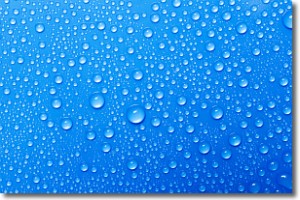
Condensation is the process which creates clouds, and therefore
it is a crucial process in the water cycle.
Condensation is the change of matter from a state of gas into a state of liquid,
and it happens because water molecules release heat into the atmosphere and
become organized into a more closely packed structure, what we might see as
water droplets.
Water is always present in the air around us as a vapor, but it's too small for
us to see. When water undergoes the process of condensation it becomes organized
into visible water droplets. You've probably seen condensation happen before on the
surface of a cold drink!
Next Topic: Contrails
Weather Topic: What are Cumulonimbus Clouds?
Home - Education - Cloud Types - Cumulonimbus Clouds
 Next Topic: Cumulus Clouds
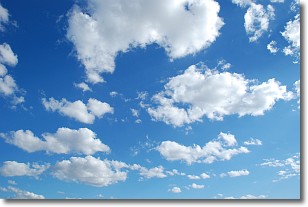
The final form taken by a growing cumulus cloud is the
cumulonimbus cloud, which is very tall and dense.
The tower of a cumulonimbus cloud can soar 23 km into the atmosphere, although
most commonly they stop growing at an altitude of 6 km.
Even small cumulonimbus clouds appear very large in comparison to other cloud types.
They can signal the approach of stormy weather, such as thunderstorms or blizzards.
Next Topic: Cumulus Clouds
Current conditions powered by WeatherAPI.com